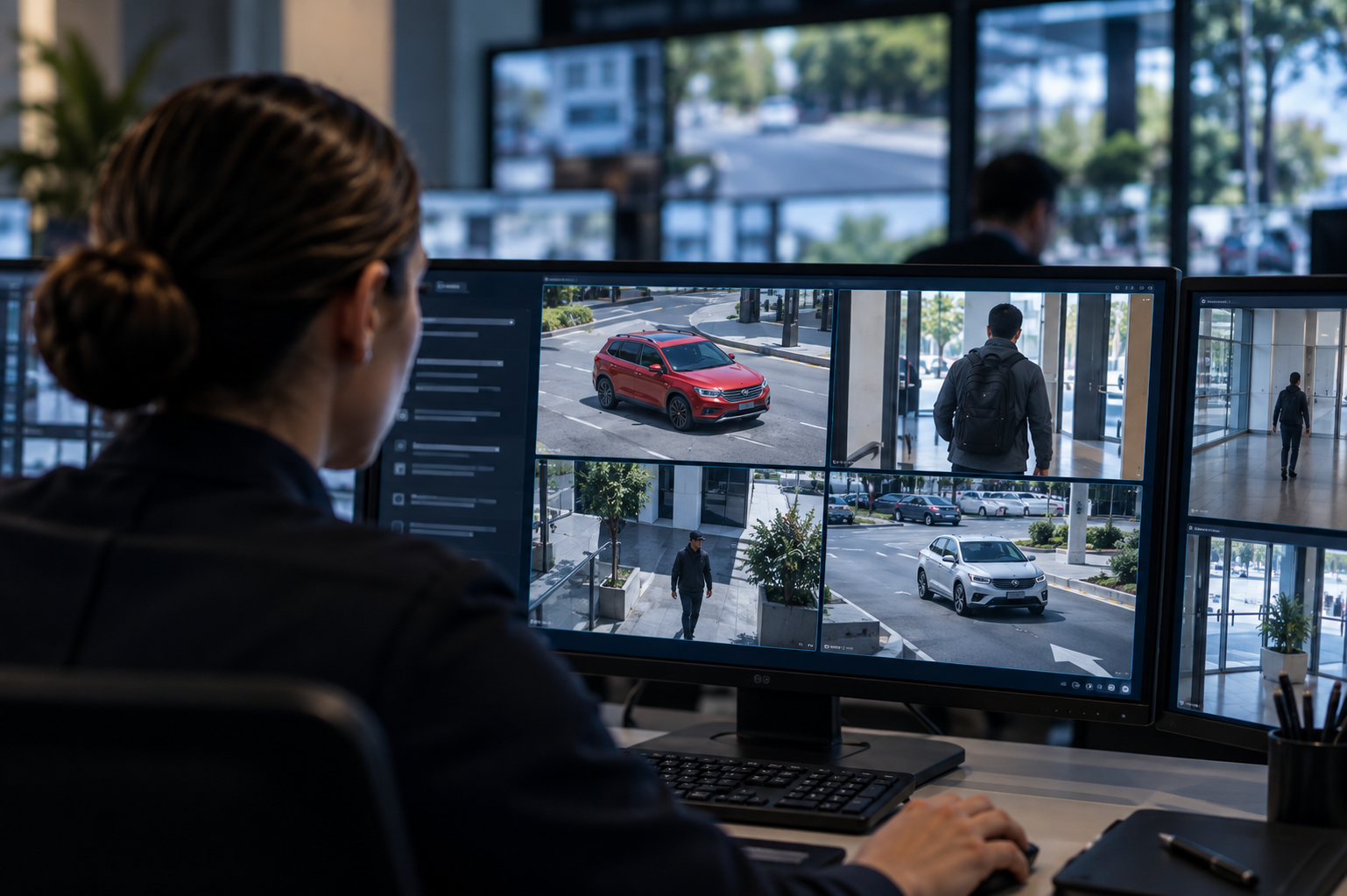

Airports are some of the most complex operating environments in the world. Every day, they balance public access, secure zones, regulatory compliance, and constant operational movement — all while keeping millions of passengers safe.
Yet despite heavy investment in security technologies, many airports still struggle with the same core issue: their systems aren’t working together.
In fact, in many airport environments, security teams are forced to monitor multiple disconnected platforms, often switching between four or five screens just to understand a single incident. The problem isn’t a lack of technology. It’s how that technology is connected (or in most cases, isn’t).
Here are five key opportunities shaping the future of airport security infrastructure.
Opportunity #1: Creating a Unified Operational View
Airports rely on a wide range of systems: video management, access control, identity management, dispatch, and analytics. Increasingly, leading airports are bringing these systems together to create a more unified operational picture.
However, many environments are still working toward this level of integration, with systems that operate independently and require manual coordination.
By unifying these systems into a single operational view, security teams gain immediate access to the full context of any event — enabling faster, more informed decision-making when it matters most.
Opportunity #2: Moving from Reactive to Proactive Security
In fragmented environments, security teams are left reacting to incidents after they occur. Without real-time context and system-wide visibility, it’s difficult to identify patterns, anticipate risks, and intervene early.
With unified data and better visibility, teams can shift from reacting to incidents to proactively identifying and intercepting risks before they escalate.
Opportunity #3: Turning Disconnected Signals into Actionable Intelligence
In many environments, systems generate valuable signals — a perimeter alert, a motion detection, an access event — but without integration, these signals remain isolated.
The opportunity lies in correlation.
Modern platforms are making it possible to connect and analyze signals across systems in real time, transforming fragmented data into clear, actionable events. This not only reduces false alarms but also helps security teams focus on what truly requires attention.
Opportunity #4: Building Infrastructure That Can Evolve Over Time
Airports operate in environments where downtime isn’t an option. As a result, many are working within legacy systems that are difficult to replace all at once.
Rather than requiring large-scale overhauls, today’s approach to modernization is becoming more flexible.
Airports are adopting platforms that allow them to integrate new capabilities alongside existing systems — enabling gradual, lower-risk evolution. This makes it possible to scale and adapt as security needs change, without disrupting ongoing operations.
Opportunity #5: Reducing Operator Complexity
At the center of every security operation is the operator. As systems have grown more complex, so has the volume of information operators are expected to manage.
There is a growing focus on designing systems around real-world workflows — simplifying interfaces, reducing friction, and delivering the right information at the right time.
By streamlining the operator experience, airports can improve situational awareness, reduce fatigue, and ensure critical signals don’t get lost in the noise.
The Shift Airports Are Making
Airports solving these challenges aren’t adding more systems — they’re finding ways to connect the ones they already have. By unifying operations, enabling proactive security, and reducing complexity, they’re transforming how security teams operate day to day.
And the impact is measurable.
In one airport environment, implementing a more unified and proactive approach led to a 30% reduction in TSA-regulated incidents, along with faster response times and improved operational efficiency.
As airport operations continue to grow in complexity, the need for connected, intelligent security infrastructure will only increase. The question isn’t whether airports need more technology. It’s whether their existing systems can work together to deliver the visibility, speed, and insight modern operations demand.